
Approach
Doing the listening before the building
This problem is difficult to solve for a reason. It is not one problem. It has many legs, many layers, many lived experiences — so the understanding has to come first.
The research
Over 100 working parents
Spoken with across different countries, industries, careers and socioeconomic backgrounds.
And the realisation that came out of those conversations was not a feature list. It was that the parenting experience is not homogeneous — not even close.
- The needs of a parent with a two-year-old can look completely different from those of a parent with a teenager
- A single parent can face an entirely different set of constraints
- A senior executive may carry different pressures from someone early in their career
- And then there are parents living with disability, caring responsibilities, financial pressures, isolation, or all of the above
So perhaps the reason this problem is so difficult to solve is because it is not one problem at all.
What the research is not
- A survey that confirms a decision already taken
- A list of features to build next quarter
- An excuse to delay shipping
What it is
A deliberate attempt to find out what the infrastructure would have to do before committing to what it looks like. It is slower than simply launching a product. That may be the point.
The second half of the research
Now speaking with HR and People leaders
To understand what organisations actually need, what they value, and what they are prepared to support.
Parents can describe the load. Only employers can describe the constraints: what already exists in the benefits stack, what the procurement reality is, what a People team can realistically operate, and what would actually move a retention number rather than decorate a careers page.
Both halves are necessary. Building from the parent side alone produces something well-intentioned that no organisation can adopt. Building from the employer side alone produces another benefit nobody uses.
Principles
What we have decided before deciding what to build
Practical over programmatic
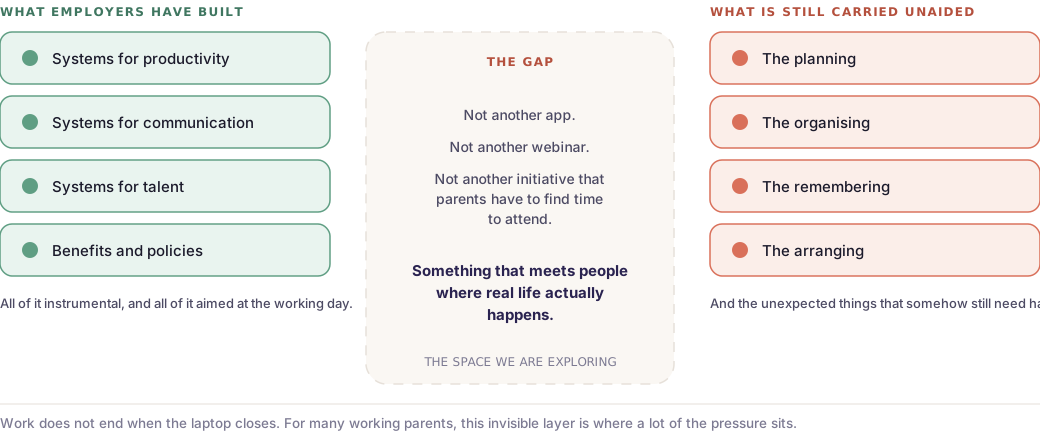
Not another app, not another webinar, not another initiative that parents have to find time to attend. Something that meets people where real life actually happens.
Whole person, not one segment
The infrastructure has to recognise the different realities of parenthood — including disability, caring responsibilities and financial pressure — rather than design for an average parent who does not exist.
Accessibility as foundation
Part of the structure, not an afterthought bolted on once the product is finished. Retrofitting inclusion is how it gets dropped.
Ambition and family together
Professional ambition and family life are not competing identities. Any design that treats them as a trade-off has already lost the people it is for.
Employers beyond benefits
The goal is to move employers past offering benefits towards creating experiences that support the people behind their workforce.
Infrastructure, not flexibility alone
The future of work requires more than flexible hours. It requires infrastructure that recognises the whole person.
These are the positions the company has stated publicly. They are principles, not a product specification — no product has been announced.
Questions
About the approach
Add your perspective
The research is open at both ends — parents and employers. The earlier you are involved, the more the outcome reflects your reality.