
Join the conversation

Driving sustainable retention for working parents

Working parents don't need another initiative. They need infrastructure.

FAITH-8 builds workforce solutions that help employers retain, develop and empower working-parent talent at scale — turning a retention problem into long-term organisational advantage.

100+Working parents spoken with, across countries, industries, careers and backgrounds
Listening firstUnderstanding the infrastructure before building any of it
EdinburghFounded 2023 · working with employers across the UK and beyond

The gap

Work does not end when the laptop closes

There is a gap between the workplace and home that we do not talk about enough — and it is not there because parents need another benefit.

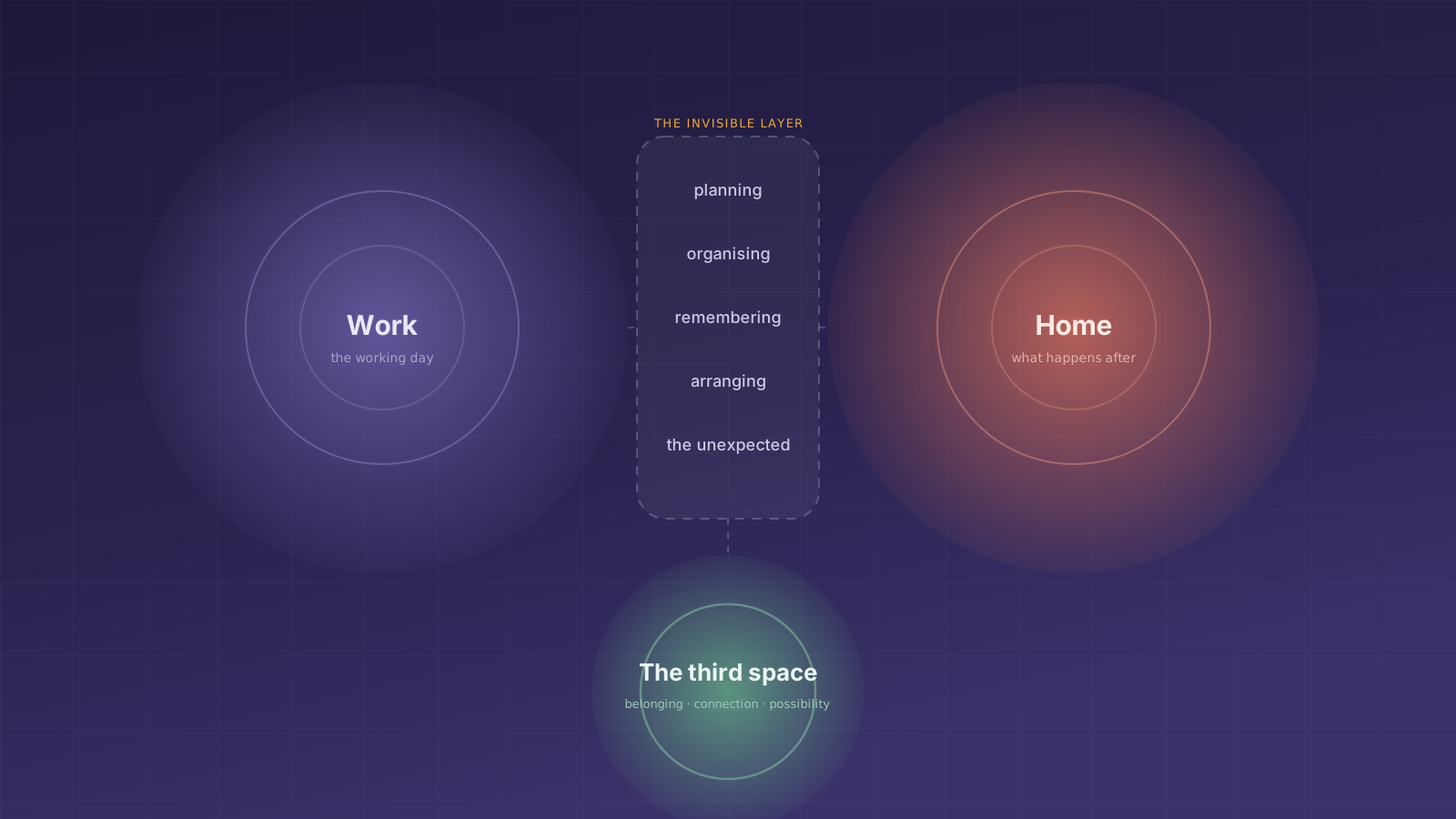
There is still the planning. The organising. The remembering. The arranging. The unexpected things that somehow still need to be handled. For many working parents, that invisible layer is where a lot of the pressure sits.

Employers have spent years building infrastructure for business: systems for productivity, for communication, for talent. But what happens to the people sustaining all of it, when the working day ends?

Why this is difficult to solve
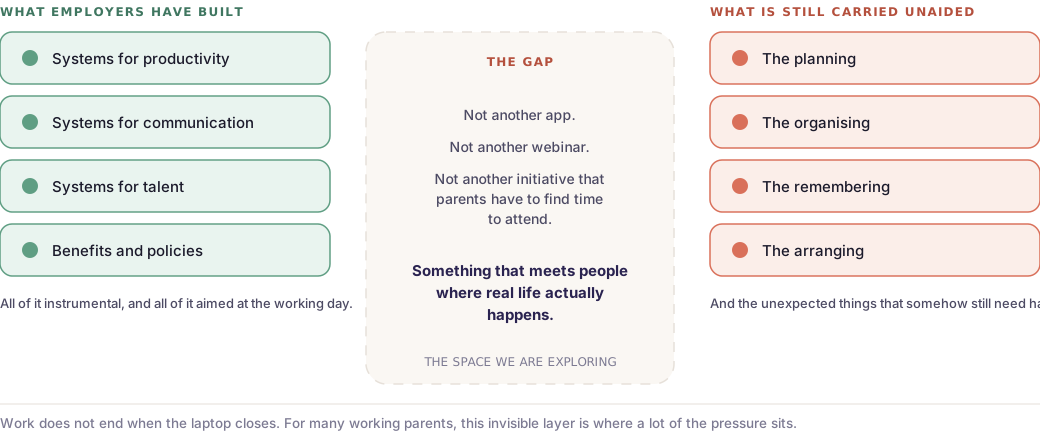
Two columns comparing what employers have already built — systems for productivity, communication, talent, and benefits and policies — with what a working parent still carries unaided: the planning, the organising, the remembering, the arranging, and the unexpected. Between them sits the gap: not another app, not another webinar, but something that meets people where real life actually happens.
Instrumental systems on the left, unaided load on the right, and the space between.

What we are exploring

A third space between work and home

Not another app. Not another webinar. Not another initiative that parents have to find time to attend. Something much more practical — something that meets people where real life actually happens.

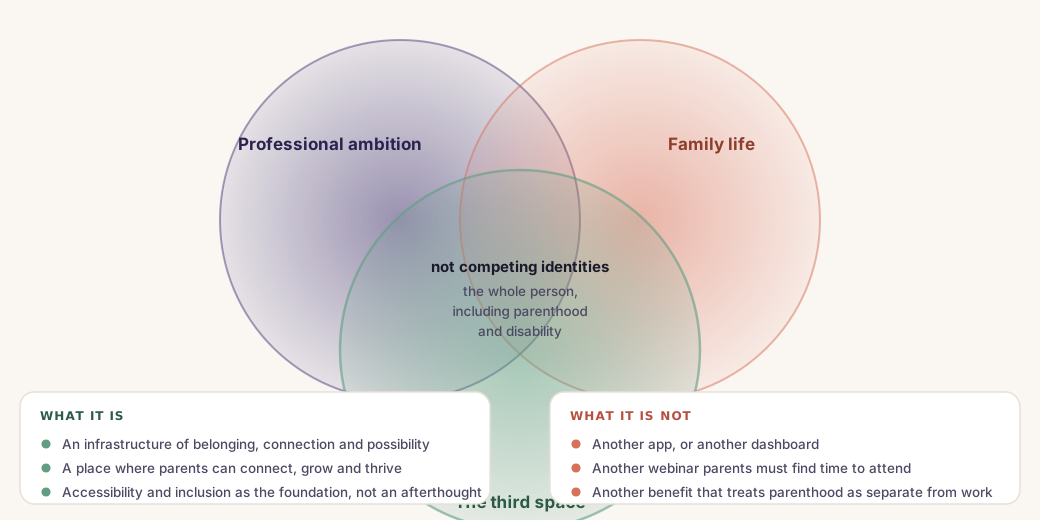
Three overlapping circles: professional ambition, family life, and the third space that emerges where they overlap. The third space is described as an infrastructure of belonging, connection and possibility, a place where parents can connect, grow and thrive, with accessibility and inclusion as the foundation rather than an afterthought. What it is not: another app, another webinar, or another benefit that treats parenthood as separate from work.
Professional ambition and family life are not competing identities.

Where parents connect

Working parents navigate careers, children, relationships, responsibilities — and, often, a lack of meaningful connection. That is the first thing the infrastructure has to hold.

Where ambition is not parked

Progression and parenthood are treated as one life, not two competing ones. The needs of a parent with a toddler look nothing like those of a parent with a teenager.

Where inclusion is structural

Accessibility and inclusion are part of the foundation, not an afterthought — including for parents navigating disability and additional demands.

The infrastructure

Three parts, and what each is for

The description is deliberately plain. Each part exists to produce one outcome for the employer, not to add a feature to a benefits portal.

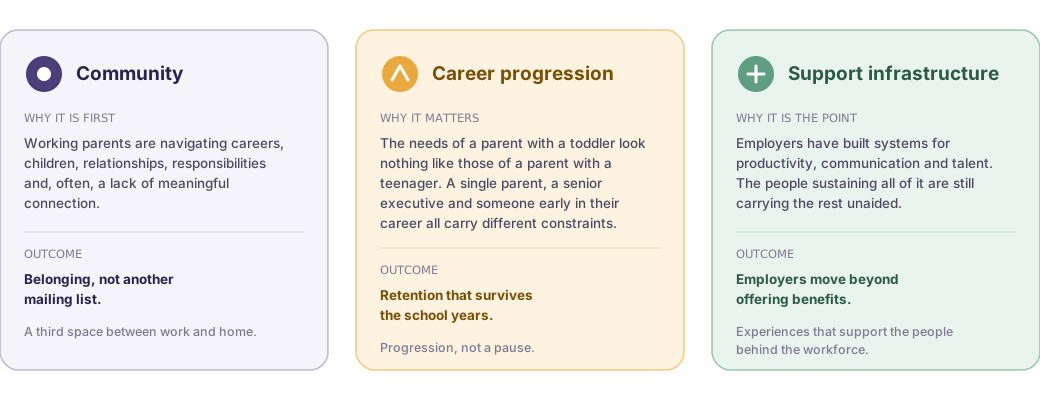
Three columns: community, which exists because working parents often lack meaningful connection and produces belonging rather than another mailing list; career progression, because the parenting experience is not homogeneous and produces retention that survives the school years; and support infrastructure, because employers have built systems for productivity, communication and talent while the people sustaining them carry the rest unaided, producing experiences that support the people behind the workforce.
Community, career progression, and support infrastructure.

Where we are

Listening, before building

The company is deliberately in its research phase. Speaking with parents first, then with the employers who would have to support whatever gets built.

  1. Parents

    Over 100 working parents spoken with across countries, industries, careers and socioeconomic backgrounds.

  2. Patterns

    The parenting experience is not homogeneous — which is why the problem has so many legs, layers and lived experiences.

  3. Employers

    Now speaking with HR and People leaders to understand what organisations actually need, what they value, and what they are prepared to support.

  4. Then building

    It is slower than simply launching a product. That is the point: the complexity is the opportunity.

“I’m not interested in building another product for working parents. I’m trying to understand the infrastructure that could actually support them.” Sera Pétrus B. Koukpaki, founder
“Parents thrive. Children thrive. Workplaces thrive.” On what FAITH-8 is building towards

If you are an employer working on retention, parental support or accessibility, this is the stage at which your input changes the outcome rather than the roadmap.

Who this is for

Two sides of the same retention problem

Working parents on one side, and the organisations that lose them on the other. The infrastructure has to work for both or it works for neither.

Working parents

You are carrying the invisible layer

Planning, organising, remembering, arranging — alongside a career that does not account for any of it. The parenting experience is not one experience: a parent with a two-year-old, a single parent, a senior executive, someone early in their career, a parent living with disability — all different constraints.

We want to hear what actually helps, and what has been a waste of your time.

Employers

You are losing people you cannot easily replace

You have already invested in productivity, communication and talent systems. What you have not built is the infrastructure that supports the whole person through the years when parenting is most demanding — and that is where retention quietly leaks.

We are speaking with HR and People leaders now, before anything is built.

The opportunity to build that future starts now

Whether you are a parent, an HR leader, or an organisation working on accessibility and inclusion — the conversation is open.